Thursday, April 21, 2022

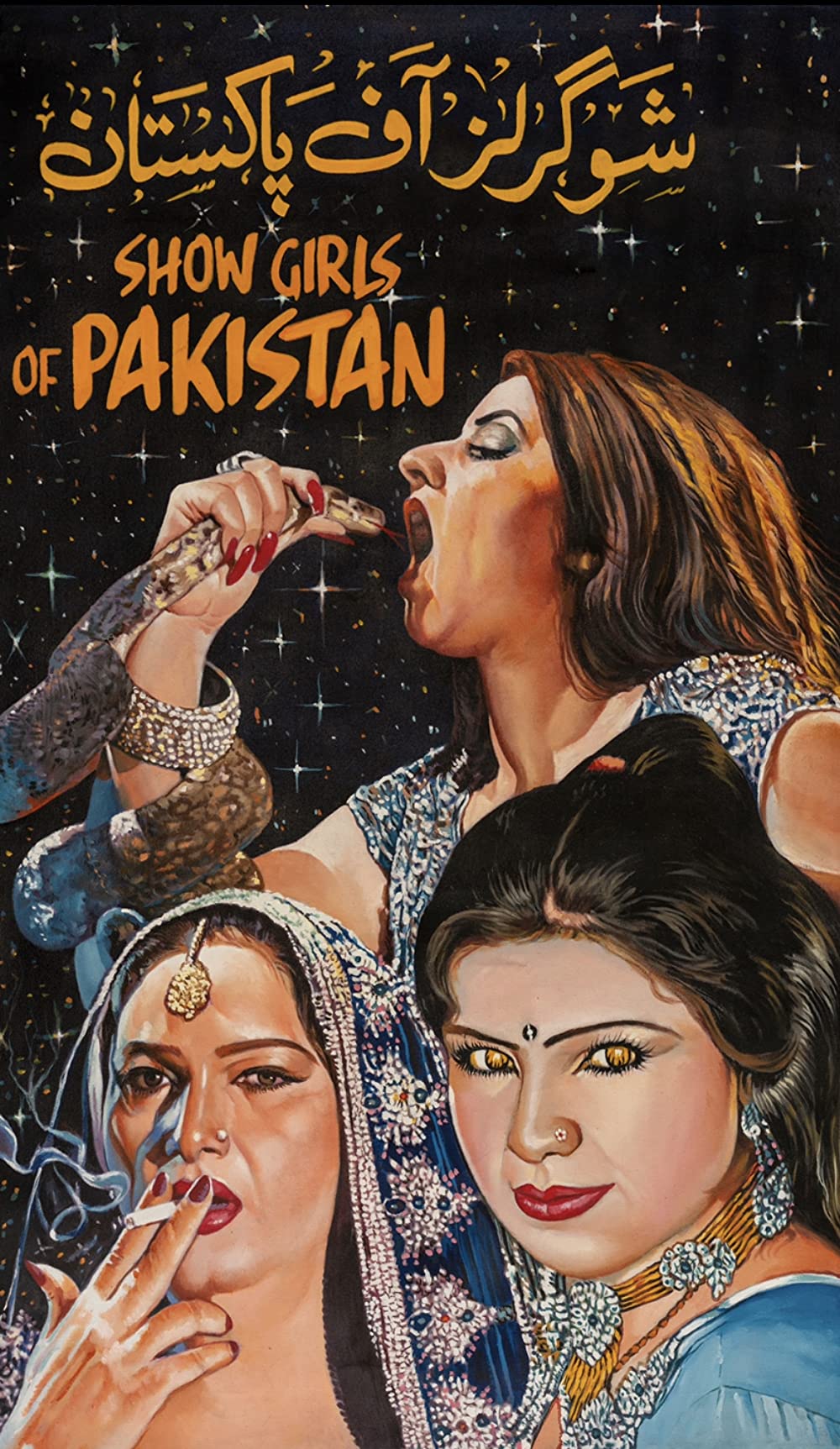
Showgirls of Pakistan: Dial M for mujra


A car pulls up to a McDonald’s takeaway window. The passenger in the back seat asks for a McCrispy meal, without mayo. She has a pronounced Punjabi twang. Both men at the counter stare at her, one smiles and asks if she’s that girl. She confirms, he nods happily. She turns away, towards the camera, grins and says “ullu (idiot)”.

The girl is Afreen, one of three protagonists of Saad Khan’s Showgirls Of Pakistan. This 2020 documentary chronicles the mujra scene—“dramas” where women dance, often raunchily, on stage. The film was selected by VICE News for its non-fiction collection The Short List, and can be seen on their YouTube channel. A 50-minute-long, unusually candid discussion between Khan, editor Joey Chriqui and VICE founder Suroosh Alvi, is appended (when Alvi talks about their excitement on seeing the film, Khan tells him his emails to VICE went unanswered).

Over Zoom from New York, where he lives, Khan says mujra was part of the culture he grew up with in Lahore. Though it was working-class entertainment, local cable providers in the Pervez Musharraf era would play CDs of taped shows, the raunchiness increasing as dusk fell. They started shooting in 2014—without a whole lot of planning. “It was one day at a time. We would shoot, then sit at a café on the weekend and I would write what I wanted to do the next week.”

The film mixes footage shot by cinematographer Anam Abbas and the subjects themselves. “I had told them from the start that I want to co-create,” Khan says. The result is raw and intimate. We see Afreen in the green room, readying for a stage show; Reema, a khwaja sira (transgender) performer, on her rounds, trying, in accordance with tradition, to get a house with a newborn to shell out some money. This is edited with pulpy B-movie clips, graphics that ape the aesthetic of cheap video parlours, shots of Lahore street food and barbershops, and incongruously glossy music-video-like clips of the dancers, to create a sensory experience that is rich and unsettling.

The second segment in particular had my jaw on the floor. It opens with Uzma, a dancer from Multan, eloping with Imran, who sources promising girls for parties and to send to the Middle East. Through their own videos and phone calls, we see the relationship run aground. Uzma accuses Imran of planting hashish in her airport luggage. He gets thrown in jail. She finds another boyfriend; he takes up with another dancer. He hires goons to rough her up; she finds out and mocks him. All this is on record thanks to the Pakistani obsession with recording calls for evidence (Khan says even his father used to record their conversations).

Showgirls Of Pakistan is cognizant of, and vigorously engages with, outsiderdom of various kinds. It’s not prescriptive film-making, yet there’s a strong sense of pushing back against the othering of people on the grounds of race, language, class, geography, gender, sexual orientation. Though Urdu is Pakistan’s national language, most of the film is in Punjabi (often wonderfully profane). Even the visual strategies are inclusive. Through the film, Khan uses aerial views of traffic, crowded streets, even Afreen dancing. This, he tells me, was a reaction to the way drone footage, often accompanying a story about war or some other conflict, has become a staple of western coverage of third world countries, including Pakistan.

Mujra may be a way out of poverty for its practitioners but it’s also, the film reminds us, a dangerous, unstable world. Dancers face a variety of threats: bans and threats from religious groups, government censorship, and everything from acid attacks to shootings by jealous fans. “There’s no interest to save them, even from the non-profit sector, which really champions women’s rights,” Khan tells Alvi. “On their own they’re navigating the patriarchy through institutions like the arts council or the police or the local goon who comes to the show, and you have to decide, in order to put food on the table, which section of the patriarchy do I have to get close with?”

Compared to the Oscar-winning shorts of Sharmeen Obaid-Chinoy, Showgirls of Pakistan, produced by Khan and Abbas, is a ruder, livelier effort, which gives a real sense of these people and their lives. It took about five years to edit, but no outside backing meant they could do it their own way. Khan is delighted the film is on YouTube, saying, “I feel like I manifested this. This is how it was intended to be, to be consumed by general people and not just on fucking HBO.”

The Girl on the Train: Review

There’s been a fair bit of exaggerated drunk acting in Hindi cinema down the years, but Parineeti Chopra in The Girl on the Train is on another level. The staggering and the slurred speech and the shaky hands filling a hip flask are straight out of drama school, but filming yourself pantomiming a violent murder in a bathroom? That’s art.

Mira has good reason to be hitting the bottle. After losing her unborn child to a miscarriage after a car accident, her marriage to Shekhar (Avinash Tiwary) falls apart. The trauma results in anterograde amnesia—the same thing Aamir Khan had in Ghajini, with similarly chaotic results. She starts to drink heavily, often blacking out and becoming violent. Shekhar divorces her and remarries. She quits her job as a lawyer and takes to travelling every day by train past her old neighbourhood.

It’s out of the window of this train that she notices and starts fixating on a woman. Her name is Nusrat. She’s a dancer with a seemingly idyllic life—though we know it’s not idyllic because we see her being chased in a forest in the opening sequence, and because she’s played by Aditi Rao Hydari, whose fate it is never to be happy in a film. When Nusrat turns up dead and Mira is placed at the scene of the crime, she finds herself the prime suspect in an investigation led by Kirti Kulhari’s Inspector Kaur.

Ribhu Dasgupta showed an affinity for the lying flashback in his last film, the 2016 thriller Te3n. The Girl on the Train—adapted from Paula Hawkins’ 2015 bestseller, also the source for the 2016 Emily Blunt film—is littered with such deliberately misleading moments, though you could put these down to Mira’s condition and drunken blackouts. It’s hard to look past the contrivances of Dasgupta’s screenplay. At one point, Mira approaches a stranger in a field for information; when she realises he lied to her and goes back to confront him, he’s standing in the same field with the same horse, like some sort of plot-point scarecrow. Over a dozen characters are introduced, none of them memorable, and there’s a hint of desperation in the way the film works to link them all to each other.

The biggest problem, though, might be the film’s setting: London. A lot of the dialogue is in English—and it’s excruciating. “Facebook aur ex-wives do not make good friends,” Mira’s friend tells her, before encouraging the amnesiac with a drinking problem to do shots. Later, the same friend says, “Divorce is a sign of a strong woman. It’s proof that you don’t take shit from anyone.” Adulterous lovers can come up with nothing sexier than “Your hugs and kisses, they’ve set me free.” “Main usse kabhi nahi bata payi, who main nahi thi, woh mera wound tha”—Mira says, the English word in the sentence throbbing like, well, a wound.

The final twist is, admittedly, tough to predict. Yet, this is only because it’s predicated on information slipped in at the last moment, and because the burden of making sense has long since lifted. Out of respect for Arthur Conan Doyle, let’s call the ending improbable, and the film impossible.

'The Girl on the Train' is streaming on Netflix.

"I've been waiting": Promising Young Woman and An Education


Just under an hour into Emerald Fennell's Promising Young Woman (2020), Cassie, played by Carey Mulligan, knocks on a door. We don’t know whose home it is, but we do know that she's tracking down all the people responsible for the rape and subsequent suicide of her best friend, Nina, when they were in medical school. She’s already exacted complicated revenge on the dean of the school and the classmate who shunned Nina when she asked for help. Behind the door will likely be her next target.

It opens, and we see a heavyset man with a grey bread, played by Alfred Molina. He doesn’t recognize Cassie, and asks if he can help her. “I’m no longer practicing the law if that’s what you came for,” he says. “It’s not about that,” she replies with a wintry smile. “I’m afraid it’s your day of reckoning.” His face falls. “I’ve been waiting,” he says.

Inside, Cassie gets to the point: Jordan Green, then a practicing attorney, helped get his client, another one of Cassie's batchmates, off the hook by attacking Nina on the stand. Instead of denying his role, Green appears almost relieved to be confronted, saying, “Have you come here to hurt me?” Cassie asks if he wants that. “I think so,” Greene says. He tells her how they dug up dirt on Nina, how he can’t sleep out of guilt, how he had a psychotic break. He makes a scary lunge towards Cassie, grabs her hands and asks if she'll forgive him. She does, telling him, “Go to sleep.”

It’s a short scene, and the last we see of Molina till the final montage. Both actors play it beautifully, but there’s an emotional tug that would not have been there had someone other than Molina been cast. Twelve years ago, he played father to Mulligan in Lone Scherfig's An Education, in which she’s a schoolgirl named Jenny in early '60s London who's seduced by an older man. There’s a beautiful scene in that film, after the relationship has dissolved, with a distraught Molina outside his daughter's room at night. He apologizes, in a halting manner, for letting the posh David (Peter Sarsgaard) prey on their class inferiority, enlisting them in his deception of Jenny.

The casting of Molina in Promising Young Woman as a figure of authority who lets down a young woman played by Carey Mulligan and is wracked with guilt seems too specific to be a coincidence. When Green says “I’ve been waiting”, it’s almost as if he’s been looking to make things right since An Education, where his character can offer nothing but remorse. In Fennell’s film, Greene can help—and he does. It’s a great instance of metatextual casting, the sins of one character informing the guilt of the other in the mind of the viewer.

There are other crosscurrents between the two films. Jenny in An Education is the definition of a promising young woman: 16, talented, bright, on her way to a richer life. When Cassie describes Nina, it’s in exactly these terms. But unlike Jenny, who emerges from her relationship wiser and sadder but not physically harmed or traumatized, Nina can't cope with her ordeal. Her death derails Cassie, who spends days working in a coffee shop and nights going to clubs, pretending to get blind drunk, going home with strange men and waiting for them to make a move on her.

Though hardly alike—An Education is a life-size drama, Promising Young Woman flamboyant and provocative—both films have a deep understanding of how societal and familial structures fail to protect young women, whether from relatively benign men like David or the kind Nina and Cassie encounter. Jenny’s friends, teachers and parents all know about the relationship, but do little to stop it (“Silly schoolgirls are always getting seduced by glamourous old men, but what about you two?” she asks her parents). Similarly, Nina is let down by the other students, the university and the law. Tellingly, the romantic leads in both films, Sarsgaard's David and Bo Burnham's Ryan, are revealed to be hiding a damaging secret—charm is not a reliable guide to character.

Promising Young Woman is a product of the #MeToo era. One can glimpse details of publicized cases in the toxic men Cassie meets—there’s a lot of Brock Turner, the Stanford athlete who raped an unconscious woman in 2015, in Nina’s assailant (who gets his comeuppance, though the manner in which he does has been hotly debated). By casting comics and former teen idols like Adam Brody as random toxic men, Fennell crafts a uniquely uncomfortable viewing experience. An Education is gentler, on the viewer and on David. Had the film been made today, it might have been starker in its framing of predation. Promising Young Woman, though, doesn’t leave anything between the lines. The challenge to the viewer is made clear early on, when Mulligan looks straight at the camera and asks: “I said, what are you doing?”

News of the World: Review

There are at least two shots in News of the World that are framed so that the screen is bordered by black on all sides. Both instances look uncannily like a movie being projected on a screen. I’m not sure Paul Greengrass, the British director behind Captain Phillips (2013) and three instalments of the Bourne series, meant to imply this, though it would be touching if he did. More likely, the long separation from movie theatres has me seeing cinema screens where there aren’t any.

News of the World, adapted from Paulette Jiles’s 2016 novel of the same name, reunites Greengrass with Tom Hanks, who gave one of his most resonant performances in Captain Phillips. Here he plays Captain Jefferson Kyle Kidd, formerly of the Confederate army, now making a hard living travelling from town to town, reading the news to whoever will pay. The year is 1870; the Civil War, though over, still looms large, with Union soldiers stationed everywhere and Kidd booed when he reads from a northern newspaper.

The specter of slavery looms, too, most directly when, leaving a small town after one of the readings, Kidd comes across a black Union soldier hung from a tree, with a sign on it that reads ‘Texas says no. This is a white man’s country’. In the bushes nearby, he finds a young girl, with blonde hair, in native American clothes. Her name is Johanna; the soldier was likely transporting her home when they were attacked. She has lived with the Kiowa tribe since she was an infant, after they killed her family and abducted her. She speaks no English, only Kiowa and a word or two of German, a stubborn remnant of her first family. Kidd tries to hand her back to the authorities but they’re too overwhelmed to care about a ‘stray’. Reluctantly, Kidd decides to return her to her surviving relatives.

News of The World is a Western, and Greengrass indulges the genre’s self-referential tendencies. Johanna’s abduction by Indians recalls John Ford’s The Searchers (Greengrass does a version of the famous John-Wayne-framed-in-the-doorway shot). Kidd tries to leave the girl in a town called Red River, the title of another Wayne classic. There’s a wonderful prolonged shootout in the mountains, with Michael Covino playing one of those psychotic Western villains driven less by material gain than an existential desire to disrupt. And there’s a stirring moment I would’ve loved to see play out longer: Kidd and Johanna arriving in town, he on his horse, she on foot, unperturbed as a herd of cattle bustle past her, James Newton Howard’s banjo theme building to a crescendo.

The film conjures up an America with disparate factions—Union, Confederate, immigrant, native American, African American—at war or in uneasy alliance with each other (parallels with the country’s present state, probably intended, don’t land with much force). Despite Dariusz Wolski’s handsome photography and a series of escalating setpieces—a shootout, a town run by racist militia, a sandstorm—the film misses the tautness of Greengrass’ other works. There’s nothing surprising about Hanks as another soft-spoken American hero, and nothing disappointing either. All great American actors end up doing a Western at some point in their careers. Hanks isn’t a natural fit—he’s all soft corners and the genre’s all edges—which is probably why it’s taken more than 35 years. But he’s perfect for Kidd: a decent man driven by a sense of duty, haunted by his failings. From first frame to last, a beautiful weariness clings to Hanks, as if he can see his end just up the road but must head towards it anyway. As the twice-orphaned Johanna, Helena Zengel starts out almost feral before gradually softening towards Kidd. To see her smile at the end of the film is stunning, like someone switched a light on in the room.

'News of the World' is streaming on Netflix.

How Reznor and Ross shaped a decade of film scoring


The Social Network begins with Jack White’s dirty blues riff from Ball and Biscuit. That track appeared on the White Stripes album Elephant, released in April 2003. The Stripes were inescapable that year, especially in bars—and a Boston bar in October 2003 is where David Fincher’s film opens. Having used the American Graffiti approach—pop music as a marker for a time and place—Fincher doesn’t do it again. The rest of the film is scored, not soundtracked, the only prominent exception being the Beatles’ Baby, You’re A Rich Man in the final scene.

As the bar breakup scene ends, we hear three descending keyboard notes. Three more notes, a slightly different combination, as we see the bar from the outside. After a minute, there’s a bass drop, not loud but deep, and a low buzzing sound like a string quartet worrying the same note, or electric bees. I can’t picture the sequence where Mark Zuckerberg, played by Jesse Eisenberg, cuts across the Harvard campus without the score playing in my mind. But that’s true for so many other scenes in the film: the sleazy thumping techno when the town girls are bused in for the final club party; the rolling percussion barreling past Eduardo Saverin’s misgivings during the ‘Sean-o-thon’; the demonic reworking of Edvard Grieg’s In The Hall of The Mountain King cut to the exertions of the rowers.

This was the first time Trent Reznor and Atticus Ross had teamed up to score a film. They'd already worked together on four Nine Inch Nails albums, Reznor as the industrial rock band's frontman and lone permanent member, Ross as producer/programmer (he also produced an album Reznor recorded with his wife, Mariqueen Maandig). Both men had soundtrack experience: Ross on New York, I Love You (2008) and The Book of Eli (2010), Reznor on Lost Highway (1997) and the video game Quake (1996).

Fincher had previously used an electronic score by the Dust Brothers on Fight Club (1999). The Social Network, though, was something new: layered, ominous, an extension of the gleaming photography and the burning igloo that is Mark Zuckerberg. Academy voters, in their wisdom, handed the Best Picture Oscar to The King’s Speech (2010), but Ross and Reznor won Best Original Score. It was only the second time, after Giorgio Moroder for Midnight Express (1978), that a full-fledged electronic score had been awarded the prize.

Ross and Reznor followed this with two more for Fincher. The Girl with the Dragon Tattoo (2011) opens with a supercharged cover of Led Zeppelin’s already deafening Immigrant Song, and the score takes off from there. The violence and Scandinavian gloom are matched by eerie swirls of sound, atonal plinks and plonks, stabbing basslines. Hypomania’s squalling fuzz is made more grating by a piano seemingly played all wrong, Perihelion sounds like a robot orchestra warming up. But the duo also taps into the film’s pitch-black humour—Hidden in Snow combines plucked notes with muted electronic wails, a fascinating mix of menace and lightness.

After The Girl with the Dragon Tattoo—which won them a Grammy—came Gone Girl (2014), one of their cleverest efforts. When I first saw the film, I was struck by the slightly rancid sweetness of the score, romantic but screwed up. I later read that Fincher told them about a time he was at a chiropractor’s place and found the music there “inauthentically trying to make him feel alright”. With this as a guiding emotion, the duo created tracks with a nagging insincerity, perfect for a film about deception and image management.

The body electric

Electronic scores in cinema date back at least to the 1940s. The keening wail of the theremin was used in films like Spellbound (1945) and The Day the Earth Stood Still (1951). Stanley Kubrick created a stir by using Wendy Carlos’s synthesized versions of classical standards for A Clockwork Orange (1971). Bands like Goblin and Popol Voh and composers like Eduard Artemyev experimented with electronics in the '70s. Then came the glory days of the synth soundtrack...Moroder, Tangerine Dream, John Carpenter, Vangelis. Yet, the default in Hollywood was always the orchestral score, for prestige and popular films alike.

It might seem simplistic to say Ross and Reznor changed film scoring with The Social Network, but they kind of did. Pitchfork credited the film with creating “a template for industrial-tinged electronica on-screen”—which proved to be the dominant sound of the decade. It wasn't accidental change either: the music was intended as a break from the past. “We got an idea from David that he wanted something that was not orchestral and not traditional,” Reznor told The L.A. Times. “In another interview, he said: “We really spent the time wanting it to sound like it came from a place. We wanted it to sound like it came from this movie, in which the way a track from Blade Runner sounds like Blade Runner.”

Obscure films rarely yield influential scores. That Fincher’s film was hugely successful, that it won Oscars and captured the spirit of the times, was a big reason other directors and studios reached for similar sounds. Suddenly, electronic scores were everywhere. Cliff Martinez, who’d done stellar work with director Steven Soderbergh in the '90s and 2000s, hit big with his retro synth score for the neo-noir Drive (2011). Martinez also partnered with Skrillex on Spring Breakers (2012), which alternated monster bass drops with blissed-out synthscapes.

Disasterpeace channeled Carpenter and Goblin and experimental musicians Krzysztof Penderecki and John Cage in his score for the 2015 horror film It Follows (the theme for the Netflix series Stranger Things, by Kyle Dixon and Michael Stein, followed in its wake a year later). Daniel Lopatin contributed pulsing synths to the Safdie brothers films Good Time (2015) and Uncut Gems (2019). Jóhann Jóhannsson’s cavernous drones accentuated the moral quandaries of Sicario (2014); Lustmord’s compositions did much the same on First Reformed (2017). Even a few big studio films mixed traditional scores with subtle electronics, like when experimental electronic music legend Ryuichi Sakamoto paired with producer Alva Noto on Alejandro Iñárritu’s 2015 film The Revenant (Sakamoto told Rolling Stone that “Alejandro wants acoustic music, like strings or whatever and very, um, edgy electronic music”).

The 2010s were also an exceptional decade for experimental film scores. Jonny Greenwood had kicked that door open with the sawing, shifting harmonics of Paul Thomas Anderson’s There Will Be Blood (2007), and continued in the same vein with Anderson’s The Master (2012). Mica Levi made a huge impression with Under the Skin (2013), a soundtrack whose dissonant screeches have the same destabilising effect as Penderecki’s Threnody for the Victims of Hiroshima, used memorably in Twin Peaks: The Return (2017). Similarly harrowing was Scott Walker’s nails-on-blackboard score for Childhood of a Leader (2016). Hildur Guðnadóttir won an Oscar for Joker (2019), though an even more adventurous work was her soundtrack for the HBO show Chernobyl, in which she sampled sounds from reactors and turned them into music.

Renzor and Ross’ scores aren’t nearly as complex or demanding as any of these artists. Their contribution has been to push the baseline to an extent that challenging, non-traditional scores now turn up in everything from prestige dramas like The Revenant and sci-fi thrillers like Annihilation (2018; Ben Salisbury and Geoff Barrow) to arty horror films like Susprira (2018; Thom Yorke), and no one seems to mind.

The duo's work was integral in bringing about another big shift: the recasting of film scores as sound collages rather than discrete melodies. With a few exceptions—Hand Covers Bruise from The Social Network, or Sugar Storm from Gone Girl—you can’t hum a Ross/Reznor score the way you would a John Williams (you can go “grrrhhhhnnnnn” but it’s not the same thing). The drone, the wash, the blare were essential markers of film music in the 2010s—and all staples of the Ross/Reznor sound. In a decade where the most recognisable movie sound was 'BRAAAAM' from the Inception (2010) trailer, this was a fundamental change.

Branching out

Having set the tone for a decade of film music, Reznor and Ross have since been expanding their own sound. A turning point, perhaps, can be located in Before the Flood (2016), an environmental documentary produced by Leonardo DiCaprio, on which they collaborated with Scottish post-rockers Mogwai and world cinema favourite Gustavo Santaolalla. There’s an openness to And When the Sky Was Opened, a willingness to trust an easy melody and not bury it. One Perfect Moment, with its delicate guitar picking over a wash of sound, has a choral joy. Disappearing Act, while less comforting, is brilliantly conceived and light on its feet: a tinkling melody—perhaps a treated glockenspiel or celeste—joined by reverberating bass and electronic squeals.

Before the Flood is still recognizable as Reznor/Ross. Who could say that about their two scores from last year, Mank and Soul? Somehow, the guy who once growled “I want to f**k you like an animal” is now composing for a Pixar film and writing tunes that Al Jolson might sing. Both scores are nominated at the Golden Globes and longlisted for the Oscars; both are marked departures from the Reznorossian sound. They collaborated with John Batiste on Soul: he handled the jazz bits, they did the rest. It’s nothing like their forbidding early work—instead, waves of sound shimmer and thrum, like a Brian Eno creation. The only prior film work of theirs that resembles it is Mid90s (2018), simple piano melodies with little electronic screwing around. There’s more distortion on Soul, but it’s the hopeful kind.

Mank is an even crazier punt. Fincher’s film about the writing of Citizen Kane (1941) is set in the 1930s. It would have made sense to go with an orchestral composer, someone like Alexandre Desplat. Yet Fincher stuck with his trusted composers, probably curious to see how they’d go about it. The duo immersed themselves in the music of the '30s, including the work of Bernard Hermann, Kane’s composer. They then constructed tracks out of string samples from music libraries. Once these were finalized, they recorded them again with actual musicians, all isolated in their own homes.

The score—52 tracks!—quotes from big band jazz, '30s pop, early Hollywood arrangements and Hermann’s score. The pastiches are very clever, and the slower tunes are plaintive and pretty. Yet, Ross and Reznor have gone so far in their quest for authenticity that I can’t hear them in the music (I felt this about Fincher and the film as well). It’s an achievement to disappear so completely and yet come up with something of high quality. But it’s Soul that’s a more natural progression of their sound, from the dark into the light. A decade in, cinema appears to be an open field for Reznor and Ross.
Jean Schulz on Sparky's craft and The Snoopy Show

This strip from 1967 was drawn by Charles Schulz using a rotoscope of Skippy Baxter, a skating instructor, who took his student to Grenoble for the Olympics that year. Photo courtesy 1967 Peanuts Worldwide LLC

Memories of the garish Peanuts Movie (2015) were still fresh when I started watching The Snoopy Show, a six-episode Apple TV+ series. Happily, I was struck by the fealty of the series to, and respect for, Charles M. Schulz's strip. The stories were familiar, either taken from the comics or a variation on familiar themes: Charlie Brown and his inability to fly a kite, Lucy and her psychiatrist’s stand, Schroeder and his love for Beethoven. At the heart of it all is Snoopy, writing his autobiography, flying on top of his doghouse, rooming with his feathered friend, Woodstock.

More than the source material, the animation itself felt comfortingly Schulz-ian, aware of movements and rhythms implied in the pen-and-ink still images. The series makes no real attempt to locate the characters in the modern world, so there’s a timelessness to the proceedings. The score by Jeff Morrow is jazzy, playful, reminiscent of the classic soundtracks by Vince Guaraldi for the TV specials A Charlie Brown Christmas (1965) and It’s The Great Pumpkin, Charlie Brown (1966).

Charles Schulz died in 2000, just before his final strip was published. His wife, Jean Schulz, is president of the board of directors at the Charles M. Schulz Museum in Santa Rosa, California. She brainstormed briefly at the start with the makers on The Snoopy Show, though it was Craig Schulz, Charles’ son from an earlier marriage, who acted as one of the executive producers. She spoke to Lounge over Zoom about the difficulties of translating the strip on screen and how Charles—whom she referred to by his nickname, Sparky—learnt a valuable lesson about authenticity.

Did you have a hand in choosing the stories that were used in the episodes?

Not me so much. In the very beginning, we had a larger group who threw out ideas. With 17,000 comic strips and 50 years, there are a lot of continuous stories that you can follow. I think they based (some of the episodes) around specific holidays, like Mother’s Day, Valentine’s Day, the first day of spring and so forth.

I have not been in on the creative side because there’s another member of the family, Sparky’s son Craig, and his son. There’s an expression, too many cooks spoil the broth, so I let them do that.

What is the hardest part of translating the strip to the screen?

I think the hardest part is that the drawings were never meant to be realistic. Even in animation which is not quite realistic, you still have to have movement and actions that require them to study the drawings, and not distort them so you don’t recognise Snoopy any more.

You had said in an interview that there were certain things in animation—the slope of Snoopy’s head, for instance—that fans will immediately take note of if they are different from the strip. Part of the difficulty is that it’s such a spare strip that small things are magnified.

The animators started with the idea of doing some Snoopy animation three years ago. They have been working till now to make sure the product is ready for primetime, as they say. It was a lot of studying and looking at how you could draw Snoopy’s eyes and express in animation the same thing they express in the comic strip without any words.

Charles was a master at suggesting movement, with just a few extra lines and changes of angle. Did he use films or real-life models when sketching?

Sparky believed that everything in the comic strip should be authentic, because that was important to him. For one strip with a particular skating move, the double axel, he rotoscoped a man from our arena doing it. He studied that so he would get it right. Any skater would recognise that movement, Snoopy bending his right knee—though dogs don’t have knees—to get around. A skater would appreciate that: They know that he has respect for their skill.

I always say the same thing: Sparky learnt this early on, because he loved classic music. Very early on, he did a cartoon of Schroeder with actual musical notes in it and someone wrote to him saying “I see Schroeder’s playing Beethoven’s something”. And Sparky realised that what he cared about, that reader cared about. He said, if you draw and write to their interest and their intelligence, you have got a fan for life. So I think he learnt very quickly that people appreciated you writing up to them, not expecting them to come down to your humour.

How did Charles feel about animation?

I think when he and Bill Melendez and Lee Mendelson started doing the classical Christmas and Halloween episodes, he realised that animation could do something he couldn’t do. He said to Bill, how are you going to make Snoopy fly? Bill said, oh you wait, I can do it. And so he had this wonderful scene in the Halloween special, with Snoopy going through the sky in his plane. I think that showed Sparky that animation had something to add to the comic strip—that his characters could be animated and have an additional impact to just the flat page.

The series feels like it exists out of time. There’s little in it that places the characters in today’s world.

Our interest, the Schulz family and the Creative Associates studio, is in presenting the characters and the atmosphere that exists in the comic strip. For us, it all goes back to the strip. We feel that there is enough content in 50 years of comics that they don’t have to go outside and make up jokes about cellphones and computers and all sorts of things and there is some value that people will like.

The other thing that has always been different about The Snoopy Show is the pacing—it’s always a little bit slower than kids’ animation, which is often frantic and fast-paced and something had to be going on all the time. I think they have made it a little bit faster but not much. I think it has kept the same calming timing and pace that I hope parents will appreciate.

'The Snoopy Show' is streaming on Apple TV+.

Wednesday, April 20, 2022

Wild tales: Beginning and Dead Pigs

There’s nothing quite like an accomplished debut film. It’s a thrill to see someone marshal the hundreds of moving parts that make up a feature into something fluid and distinctive on their first attempt. And critics love betting the house on debuts, for it allows them to say, I've just discovered someone amazing.

Two recent debut features, both by women directors, are part of the MUBI roster this month. Déa Kulumbegashvili’s Beginning (2020) was added on 29 January (there’s a conversation between her and director Luca Guadagnino appended to the film on MUBI). And from 12 February, Cathy Yan’s Dead Pigs (2018) will stream exclusively on the platform. The films could not be more different, yet they are united by the evident control of their makers and the specificity of their vision.

Beginning made the official selection for the Cannes Film Festival last year, and could well have been among the awardees had the festival taken place. It’s a formidable work by Georgian director Kulumbegashvili, a 100-proof distillation of art film rigour and patience. If this makes Beginning sound a bit forbidding, that is my intention. It begins with an attack on a Kingdom Hall of Jehovah’s Witnesses in a provincial Georgian town, a long uninterrupted sequence observed at a remove by a static camera. The same technique is maintained through the film: extended, unbroken scenes, with the camera only moving on rare occasions.

After the attack, which we learn is just one of several the community has suffered, we see the fallout through the eyes of Yana (Ia Sukhitashvili), wife of religious leader David (Rati Oneli, also the film’s co-writer). She is—or was—an actor, having given that up for her husband’s career. They have a precocious young son, and while she’s affectionate to the boy, she’s unmoored and unhappy in her life. A visit from a shadowy detective results in more trouble—the scene where they are talking in her house is made scarier by Kulumbegashvili’s severe framing (when the camera slowly pans, the movement gave me a start, which is testament to the oppressive stillness of the scene till then).

Mexican director Carlos Reygadas is executive producer, and there’s something of his mix of brutality and austere beauty in Beginning. But the film is its own thing—though that experience can be difficult, even for someone versed in the ways of slow cinema. There’s a seven-minute static shot of Yana lying on the grass, a scene both believable and difficult to sit through. Despite its formal beauty, Kulumbegashvili’s control and subtle grasp of colour, this unforgiving film requires considerable commitment from the viewer.

It was a relief to follow the rigours of Beginning with the easy charm of Dead Pigs. Cathy Yan’s comic drama is set in Shanghai, where, for reasons unknown, pigs start to die. They are thrown into the canal by farmers and wash up on the banks (this actually happened in 2013). One such farmer is Old Wang (Haoyu Yang), an eccentric indebted to a couple of impatient lenders. He reaches out for a loan to his sister, Candy Wang (a scene-stealing Vivian Wu), the tough-as-nails owner of a hair salon who is having her own problems, with a big corporation looking to convince her to move so they can build a posh neighbourhood where her family home is. And there’s Yang’s son, Wang Zhen (Mason Lee), a waiter in love with a rich girl, Xia Xia (Meng Li), who visits his restaurant with her friends.

Yan interweaves these strands into a funny and caustic look at modern-day China, with its pampered youth listening to American pop and the middle class sold dreams of VR sets and “Spanish” housing projects (there’s a fourth, less successful, subplot concerning an American architect with the company that’s trying to evict Candy). The tone is never far from satire but there’s a palpable concern for ordinary folk swept aside by the juggernaut of capitalism. There’s a lovely scene where Zhen, whose father thinks he’s a successful businessman, takes the old man for lunch at a fancy restaurant. It’s an exquisite bit of role-playing, with Lee assuming the brisk manner of a time-strapped executive even though he’s in as bad shape as his father (he becomes a professional accident victim for a spell).

Yan, who lives in New York, made the jump to studio films with her sophomore effort, the Harley Quinn solo vehicle Birds Of Prey (2020). You can see seeds of that in the use of pop music and the wacky humour of her debut. My favourite bit in Dead Pigs is when, for no good reason, it turns into a musical. The song is I Only Care About You by Teresa Teng, the late Taiwanese singer popular in mainland China despite her criticism of the Tiananmen Square crackdown of 1989. Fittingly, there’s a hint of another, more recent protest in this sequence. When the actors unfurl coloured umbrellas, it’s tough not to think of the pro-democracy protests of 2014 in Hong Kong: the Umbrella Movement.